Tutors India UK / the US Dissertation topic/ title provide a convincing rationale for critical decisions; Tutors India's literature review experts find an easy way to handle this tension and make you hassle-free for your dissertation literature review. Note:All our writing, editing, coding, algorithm, software programming & statistics Jan 07, · The literature review often appears near the start of your dissertation, and is a key part of your overall dissertation structure. It is a summary of the current writings in the field you are researching and into which your dissertation will eventually fit Jan 06, · A literature review is a select analysis of existing research which is relevant to your topic, showing how it relates to your investigation. It explains and justifies how your investigation may help answer some of the questions or gaps in this area of research
Writing a Literature Review
Learning Skills:. Writing Your Dissertation or Thesis eBook. Part of the Skills You Need Guide for Students. Subscribe to our FREE newsletter and start improving your life in just 5 minutes a day. A literature review demonstrates that you have read around critical review of literature dissertation topic and have a broad understanding of previous research, including its limitations.
In the literature review, you summarise the main viewpoints and important facts that you encountered in your reading as they relate to your chosen topic. You will also use the literature review to justify the value of doing research on your topic by showing what is already known, what is not yet known, and how it is relevant.
Your literature review should not simply be descriptive but should also provide a critical analysis of the body of work, and demonstrate that you understand how it fits together as a whole and how your own research fits with previous studies. A key aspect of a literature review is what sources you select to include, and which you exclude. Thanks to the internet, literature searches are now relatively easy, and can be done from the comfort of your own laptop without needing to go anywhere near a library.
However, a word of warning is in order here. The ease with which anybody can access and publish to the internet means that many items published online have not been scrutinised by anybody other than the author.
Furthermore, because items on the internet are frequently changed, you may find that something you read yesterday is no longer available in the same form today. However, internet sources can be very useful for up-to-date information, especially current affairs or ongoing or very recent research. Blogs and sites like the encyclopaedia Wikipedia are particularly prone to these problems.
For these reasons, a general rule of thumb is that you should only rely on internet resources from the websites of organisations whose information you already know to be reputable, critical review of literature dissertation, like SkillsYouNeed.
Do not underestimate how much physical libraries and librarians may be able to help you. Librarians are usually hugely experienced in using all the search tools and databases, and can often show you much quicker ways of doing things, as well as tips and tricks to help you refine your search, critical review of literature dissertation. Furthermore, libraries may have copies of books and academic journals that are not available online. So a trip to your library may prove to be very helpful.
Spend time working out which of the available databases are going to be most useful for your topic, critical review of literature dissertation, including asking the librarians for advice. A simple way to get started with finding appropriate materials is simply to ask people who are likely to know. You might for example ask your tutor or supervisor, critical review of literature dissertation, or an expert or practitioner working on your chosen topic.
Often, they will be able to give you some very helpful ideas about where to begin your reading. However, be aware that some professionals may find constant requests for information intrudes on their time. Your search terms are one of the most important elements of finding the right sources for your research project and developing them is an ongoing process. Use the one or two articles that you find that are on the right lines to identify alternative search terms, and continue to search until you turn up useful articles.
You can also use a tool such as Google Adword Keyword Research Tool to identify phrases and keywords that are similar to your chosen term s. This tool is usually used by internet marketing professionals to help them find keywords similar to their own but can be useful for academic research too.
Finally, keep searching. You need to read a lot of sources critical review of literature dissertation find the most relevant and will probably end up discarding more than half of what you read, critical review of literature dissertation.
If not, critical review of literature dissertation, move on. Your literature review should not only show that you have been reading a range of materials related to your topic, but also that you have been reading them critically and have thought about the wider contexts and how they apply to your own area of research. Critical reading is a skill that, like any other skill, is acquired with practice.
In essence, critical review of literature dissertation, reading critically means that you do not take the claims at face value: you question the basis for claims, why the author may have done and said things in the critical review of literature dissertation way he or she did, what the wider context is, and whose interests are being served by the claims you encounter.
Your university or college supervisor will be able to give you an idea of how many sources you should include in your literature review. You will probably need to read at least double that number to find enough that are suitable for inclusion. You should also try to find several different sorts of sources: books, journal articles, dissertations, conference papers, working papers, and so on. You need to make sure that you identify the key texts for the subject. Check a few references, and see which texts are cited most often, or ask the librarians how to use the databases to check how often each article is cited.
There are some theories or articles which are so important in a particular field that they need to be cited, critical review of literature dissertation long ago they were originally published. But those apart, you should critical review of literature dissertation prefer more recent sources published in the last five or ten years. As a rough guide, the balance of publication dates should be about two thirds from critical review of literature dissertation last 10 years, and no more than one third older than that.
For general advice about academic writing, see our page on Writing an Essay. In general, your literature review should start with one or two broad paragraphs, demonstrating your understanding of the breadth of your area of study. You should then discuss the literature that deals with your area of research and, finally, consider and critique the studies that are most directly relevant. The best way to do it is probably to summarise each source as you go along, referencing it carefully, and grouping your sources by themes.
You will almost certainly find that the themes develop as you go along, and so do your search terms. Where there are gaps, you can then go back and search for more sources on that area, critical review of literature dissertation. The best literature reviews are not only descriptive, but draw together similar thinking and provide a critical analysis of the previous research, including highlighting really good studies, or identifying flaws and gaps.
This will also help you to decide on your own methodology. Another way of checking whether you are evaluating or merely describing is to look at whether you have discussed work chronologically likely to be descriptive or in terms of whether there is general agreement on a topic much more likely to be evaluative.
Ask yourself the following questions to decide whether or not a particular piece of work is worth including in your literature review. Your literature review should also demonstrate how your study does or will relate to previous work, and how it either fills gaps, or responds to calls for further work. Your literature review will help you to refine your research question. It should also help you to explain how your methodology fits with previous work, and help you to identify and evaluate possible research methods.
The past tense is always going to be correct for something that was expressed in the past; the present tense may no longer be true.
Your university will almost certainly have a preferred style for citations and references that you will need to use. Make sure you understand how this works before you start writing your literature review and use it consistently throughout.
For scientific subjects, Vancouver numerical referencing is often preferred. However, it is much harder to check that your references are correct using this system. It is therefore better to use a name, date system of citations until you are certain that you have finished revising the document.
Alternatively, use a system of end-notes which will critical review of literature dissertation update critical review of literature dissertation numbering if you move a citation as you will otherwise end up hopelessly confused. Finally, once you have written each section by theme, go back and read the whole thing to check that the sections flow logically one from another, and that the whole literature review reads sensibly critical review of literature dissertation coherently.
As with any essay or extended piece of writing, editing and redrafting will improve the quality of your writing, as will asking someone else to read it over and check for errors or inconsistencies.
You might think such details are less important than the content, but the marker may not share your view. Continue to: Writing a Research Proposal Writing a Dissertation: The Introduction. See also: Writing a Methodology Dissertation Results and Discussion Dissertation Conclusions and Extra Sections Academic Referencing.
LEARNING SKILLS Writing a Dissertation or Thesis Researching and Writing a Literature Review, critical review of literature dissertation.
Search SkillsYouNeed:. Writing Your Dissertation or Thesis eBook Part of the Skills You Need Guide for Students. Subscribe You'll get our 5 free 'One Minute Life Skills' and our weekly newsletter. We'll never share your email address and you can unsubscribe at any time. Researching and Writing a Literature Review Part of our: Dissertation Writing guide.
Critical Reading Your literature review should not only show that you have been reading a range of materials related to your topic, but also that you have been reading them critically and have thought about the wider contexts and how they apply to your own area of research. See our page, Critical Reading for more information.
How To Write Literature Review For Dissertation Uk (THE STRUCTURE)
, time: 9:48Writing a Literature Review | SkillsYouNeed
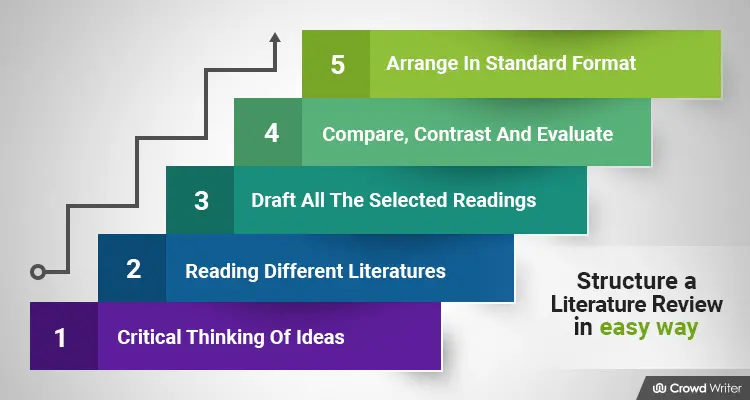
Mar 17, · Example of Literature Review Outline. Those of you who wonder how to write a literature review should consider the following literature review outline template before you start. I. Introduction. a. Introduce the topic of investigation, its relevance, and your personal interest in it. What problems do you want to solve? b Your literature review should not simply be descriptive but should also provide a critical analysis of the body of work, and demonstrate that you understand how it fits together as a whole and how your own research fits with previous studies. A key aspect of a literature review is what sources you select to include, and which you exclude Jan 07, · The literature review often appears near the start of your dissertation, and is a key part of your overall dissertation structure. It is a summary of the current writings in the field you are researching and into which your dissertation will eventually fit

No comments:
Post a Comment